- Adam Henry
- Feb 11, 2025
- 12 min read

From its inception in the 1960s through to the early 1990s, the internet was a domain shaped by academics, office work, and formal journalism. It was a professional, functional, and highly structured environment, designed primarily for research, communication, and data sharing. However, by the mid-1990s, this rigid, work-oriented culture began to fracture, giving rise to a digital countercultural movement that redefined the internet as a space for creativity, subversion, and community. This transformation was driven by three key conditions: the repurposing of computers for entertainment, the mass adoption of the internet by non-academic users, and the rise of anti-censorship ideals and activism. Together, these forces combined like a philosophical Megazord and spawned a new era of internet culture, characterized by branching subcultures ranging from hackers and gamers to fandoms and Stan culture.
The first thing that needed to change was the perspective around computers. You see, back in the 60s and 70s, computers were seen as just that, tools for computing; calculating functions and sending that data to different users in professional correspondences via electronic mail. These early networks, like ARPANET, were designed to facilitate academic and military collaboration within a Cold War context, and their users were primarily researchers, engineers, and professionals. This treatment of the computer as a exclusively professional tool extended to email, which was used sparingly and with the same level of formality as an official memorandum. Casual messages or personal inquiries were almost unthinkable, as email was still a privileged, high-cost resource in government and academic circles. Even sending a message as innocuous as asking for an electric razor forgotten at a conference, which was exactly what Len Klienrock did in September 1973, felt thrilling, like he was getting way with something illicit. Then brings us to the first of two pivotal moments that triggered a massive shift in how users viewed computers, when a single mass email from a the MIT Artificial Intelligence Laboratory was sent to all users within the network. But to everyone's surprise, it doesn't requesting advice on some technical issue, instead, it asked everyone their favorite science fiction authors. Even Vint Cerf, one of the fathers of the Internet, himself received this fateful e-mail marked “SCI-FI LOVERS”, opened it, and beheld in awe how at the eager and positive correspondences that amassed within it. The Internet was about to become something far more than any other communications technology before it. That he was gazing upon the birth of a social medium. What had began as a simple query quickly evolved into a makeshift science fiction club constructed from an email list, with participants sharing recommendations, critiques, and fan theories. This was quickly followed by the YUMYUM email list, which provided recommendations and debated the quality of restaurants in the Bay Area, then WINE-TASTERS for--well--wine aficionados, Then another, more meta email list called HUMAN-NETS, appeared, which was populated with researches to study and discuss the human factors of these newfound online communities. These email lists all became the earliest examples of online community-building, laying the groundwork for ALL the social media platforms that dominate the internet today. Yes, when you sign-up for an account on any platform, your technically creating an email to which everyone you follow, from your grandma to your favorite TikTok creator, you’re technically subscribing to them exact same way you would’ve subscribed to, let’s say, Nintendo Power or Nickelodeon Magazine back in the analog days of old.

Then in 1976, the second moment that pivoted our understanding of computers and the networks that connected them when one of the designers of the first internet modem, William Crowther, had been separated from his daughter by a divorce and was seeking a way for his daughter to still be able to play Dungeons & Dragons without him present as the Dungeon Master. For those who aren’t tabletop-savvy, a Dungeon Master, or Game Master in roleplaying games is the person assigned with designing the fictional world the players would be exploring, devising the plot of the campaign for the players to quest through—or utterly defy and derail—, and descriptively portraying the characters for the other players to interact with, as well as performing behind-the-scenes calculations to determine the success or failure of each of the players actions and narrating the resulting circumstances of said action.
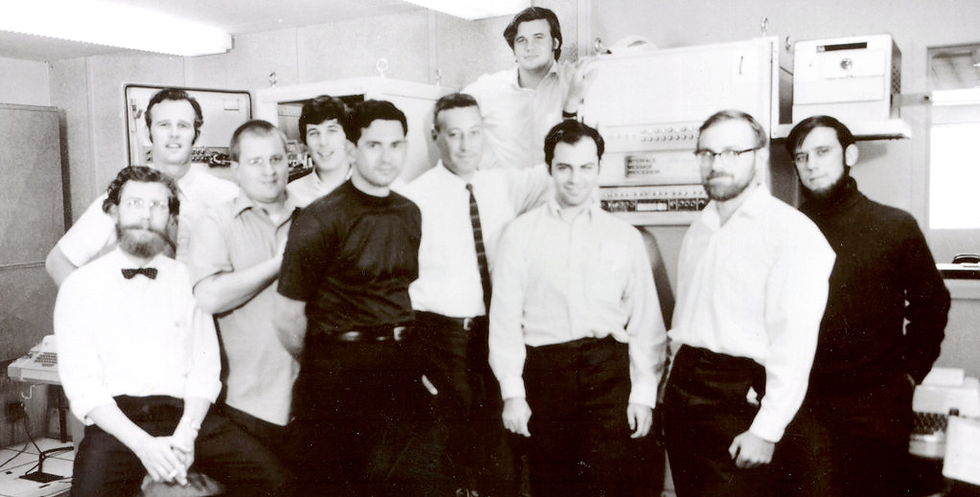
It takes some special kind of nerd gaze upon the big bulky PDP-1 mainframe in his workplace at Bolt, Beranek and Newman’s laboratory in Massachusetts, and think, “I can make this play games with my daughter." So he wrote a program to simulate the roleplaying experience, by having the computer perform the tasks of the Dungeon Master, called Colossal Cave Adventure, and then…went on vacation. BUT because this computer could be accessed by various colleges or facilities within the network such as MIT, and because many computer programmers had curious student remotely logging on to mainframes and lurking about like rock star groupies, Colossal Cave Adventure was discovered and word of the computer that could play DnD with you spread like wildfire and soon everyone savvy about Adventure, was logging on to this BBN Mainframe to try it out, while other programmers were inspired to create their own computer games while other programmers decide to make computer games of their own, like Zork. Thus Gamer Culture was born.
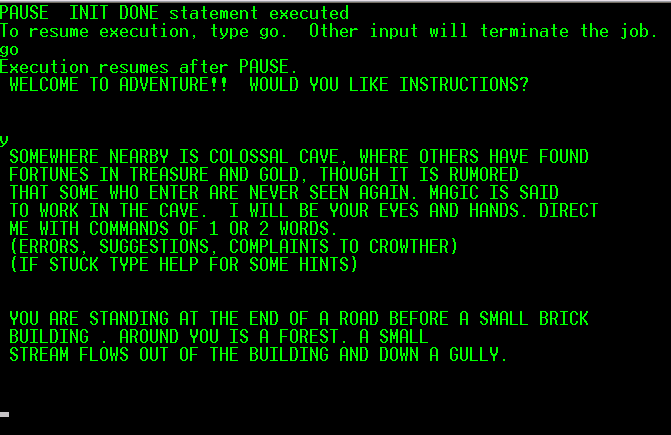
Instantly, the minds of young, impressionable computer programmers and engineers had been forever altered. This tool of labor could be capable of being a medium for entertainment. Soon college computer engineers and hobbyists who were ordering DIY computer making kits, were repurposing their own utilitarian computer devices for recreation. And by the 80s, these text based roleplaying games would connect online to allow players to role-play with each other, inventing chatrooms. Yes, the DnD subset of early gamer culture invented chatrooms. It isn’t a stretch to say that at the core of all video games is this simulating the interaction of a Game Player and a game master to engage in roleplay, whether you are saving princesses in a medieval or fungal kingdoms, enrolled in World War with undead Nazis, or constructing mines to gather resources to take on a infernal netherworld.
But I’m getting ahead of myself. Certainly this shift in how users engaged with their math machines and the internet that connected them was marking the beginning of a broader cultural transformation. Humanity barely been online for a decade and they had already began to shed the medium’s strictly professional identity, but they had only undone the first button of this business suit; the Internet was still primarily used by college academics and other professional and this digital society was shaped partially by college culture, including one particularly dreaded annual experience; September.
You see, every September college campuses across the nation would witness an enormous wave of new college freshmen, which would inevitably coincide with an influx of new users that who, mind you, were gaining internet access for the first time in their goddamn motherfuckin lives and hadn’t the faintest clue how to properly behave. These newcomers would flood Usenet with clueless, off-topic, or just plain annoying posts. It was so bad that an early meme developed amongst seasoned Usenet users in the summer prior postulating “Is The Death of The Internet Coming in September?"
Eventually these Usenet Newbies would be either guided by more experienced users until they learn the rules of “netiquette.”, which was essentially office etiquette revised slightly for this digital frontier. Either patiently referring them to a FAQ or impatiently telling RTFM, Read The Fucking Manual” Either that or these noobs would just bore themselves away; despite popular belief, people were just as impatient in the 90s as they were today, and the internet was a much slower medium with a still super serious community after all.
That was all about to change. You see, The National Science Foundation, managers of NSFNET, the early backbone of the internet at the time, had originally banned the commercial usage of the internet, but was struggling to meet the financial requirement to maintain the growing medium and, by the late-80s, facing serious scalability concerns, so they had finally opened the internet to businesses and commercial internet providers. Leaping at this opportunity was none other than America Online (AOL), who promptly made a deal with Usenet service providers in 1993 and integrated Usenet access into its platform. Before this AOL users were in a "walled garden" of sorts, previously been stuck in AOL-only chatrooms, but now the floodgates were about to open
And flood in they did. Unlike prior Septembers, these users where predominantly NOT green-gilled college freshmen, but entirely random Americans who didn’t know the pre-existing internet culture or netiquette, and for many of them, did not care to learn. AND THEY WOULDN’T STOP COMING; millions of them each day, every day, and day after day. From fall into winter into spring. It was “The September that never ended.” The Eternal September.
For the first time, Usenet’s veteran users were outnumbered by clueless newcomers, and there weren’t enough old-timers to “train” the new ones before even more arrived. The unspoken social rules that had kept Usenet running smoothly—like avoiding spam, trimming replies in messages, and staying on topic—collapsed under the sheer weight of new users who didn’t even know these rules existed or didn't care.
The result was a breakdown of the old norms and the emergence of a more chaotic, irreverent online culture. The sheer volume of new users overwhelmed the established community, and the traditional gatekeepers of the internet culture lost their ability to enforce the rules. This period marked the beginning of the Internet's transition from an elite, insular network—an invite-only club for nerds, programmers, and academics— to a more democratic, if unruly, public space— a public playground where anyone could log in and say whatever they wanted, for better or worse.
So in the following years, new users were logging on to the internet in droves. Usenet subsequently constructed Alt category of discussions that allowed less moderated and more causal discussion ranging from video game rants, to fandom theorizing, to porn. LOTS and LOTS of porn. Oodles and oodles of boobles and doodles. Meanwhile AOL chatrooms were becoming a place for users to do interact a little bit more... intimately than chatting about the Cowboys and the Bills or role-play as elven rangers and orcish barbarians. Of course, to the rest of the world, the internet was still viewed traditionally, as an academic domain built for finding and researching sources—an extension to one’s library, if you will. If the concept of TikTok and WiFi so easily transcended the comprehension of adults like US representatives in the year of our lord 2021, you can only imagine how completely shocked and out-of-the-loop adults that age would have been in 1995, when it finally reached them that there was *le gasp* adult content...on previously adult-exclusive medium... predominantly ran by college students. The snitch in question was Carnegie Mellon University student Martin Rimm, who conducted a study titled Marketing Pornography on the Information Superhighway, that made the grossly inaccurate claim that 83.5% of images on Usenet were pornographic and that online adult content. Of course, because in the 90s, reading studies was for squares, it wouldn’t be until lawmakers, news anchors, and advocacy groups got a hold of the report that the chronically offline adults lost their collective minds. Philip Elmer-Dewitt of TIME magazine published an article citing the study with the title CYBERPORN in big-ass letters. Meanwile Nebraska Senator James Exon learned of the icky-icky cuss words and sex stuff, sought out the smuttiest photos from the grimiest corners of the web (remember this was before the search engines really took off), printed them out, and showcased them to other politicians claiming that any child with a computer could stumble upon these images with just a few clicks and that the internet was destroying America’s youth. Clearly the internet was a digital Thunderdome of depravity, and Vice President Al Gore's push for expanding internet access publicly-funded institutions with the National Information Infrastructure (NII) initiative JUST started integrating them K-12 schools and public libraries. In these politician's minds, they were practically handing out free internet access to minors like it was free candy. So Exon personally spearheaded effort to resolve this issue. By limiting minor access to the internet? No. By setting up bars from certain webpages on school computers? Nah. By informing parents to be responsible and knowledgeable about their children’s internet access and activity? Why on Earth would you put the responsibility of child-raising onto the parent? To threaten forum moderators, website owners, and even whole Internet Service Providers with two years prison for content users post that could even potentially be seen by a minor? Yep, that’ll go over well and everybody’ll like that! Everybody hated the Communications Decency Act (CDA) of 1996. The law was about as well-received as a Windows ME update. The autumn before the act was even approved, a meme was already spreading on Usenet with recitations to George Carlin’s Seven Dirty Words comedic routine in users signatures. By Christmas, the Alt.humor Newsgroups were posting parodies of Christmas songs devoted to the unbridled depravity of Usenet, and, by the time the act had actually passed, the online reaction to the US governments censorship efforts had further devolved into posting crude, irreverent, absurd content simply for the defiant sake of posting it in retaliation to censorship.
The resistance was swift and brutal. Groups like the ACLU dropped a lawsuit on that shit day one. Internet users either joined the Blue Ribbon Campaign and added a blue ribbon to their websites to voice support of free speech, made parody websites mocking the CDA, or straight up went dark for several days in protest.
ACLU’s lawsuit in question was Reno v. ACLU (1997), in which they argued primarily that the CDA 1996 was a massive and blatant violation of free speech. Furthermore, there was “the Indecency Problem” in which the CDA was prohibiting “indecent” speech or content, but when pressed, nobody would provide a straight answer to what would be determined as indecent, which means that, with enough effort anything from medical research to classical artwork of buck-ass nude gods and goddess could be classified as indecent and, I reiterate, subject to that two years jail time.
During this legal debate we learned another essential issue that might remind you of the legal debate around the TikTok ban. That the cushions of government chairs are full of old farts that could not (and still cannot) make heads or tails of what exactly the internet is, and thus what precedents on censorship they should follow. Was it like movies? Was it like radio? Was it like broadcast television? Was it like literature?
Eventually, the decision was that the internet was like NONE of these mediums before it-- a decision that anybody that was even marginally chronically online at the time would’ve said “no shit”-- that instead, The internet was like the library, in which media for all age groups can potentially be found and accessed. Again, literally anybody could have told them "no shit". They struck down its key provisions, gutting it until it was a single section that shielded online platforms for being liable for user content. This was a huge win for free speech—and an even bigger win for every 23-year-old who just wanted to make stupid websites about their X-files fanfiction.
While government censors were thwarted, the effects had already been done; a new internet counterculture which had been gestating the niche communities of the internet mentioned above, had been born—one that thrived on absurdity, irreverence, and a total lack adult supervision and of gatekeeping by legacy media. The internet wasn’t just for academics and office drones anymore. It was now a playground for weird memes, oversharing TMI stories, and collecting and reposting the most rotten (soon to be rebranded as “cursed” by Reddit) photos and videos imaginable, simply for the virtue that they had the freedom to.
By the turn of the century, this new internet counterculture was defined by two key characteristics:
Ironic Stupidity and Absurdity: The rise of websites like Something Awful exemplified this trend, with their motto, "The Internet Makes You Stupid," capturing the spirit of the era. Memes, pranks, and intentionally nonsensical content became hallmarks of online culture, as users reveled in the absurdity of the medium. This aesthetic, where irony and lack of restraint reigned supreme, would go on to influence everything from early viral videos to modern meme culture, under the frankly unnecessary Gen Z/Gen Alpha rebrand, “brainrot"
Anti-Censorship and Self-Publishing: The common saying "Only on the Internet" reflected the belief that the internet was a unique space for unfiltered expression. Platforms like Geocities, LiveJournal, DeviantART allowed users to create and share content without the need for traditional gatekeepers, fostering a culture of self-publishing and grassroots creativity. You want to post a painting of Hitler in riding a flying carpet in his PJs? Nobodies stopping you! Want to stretch out your donuts hole until it becomes the size of the oldest bait-and-switch prank in internet antiquity? Welcome to the internet!
These were the three canon events would be what set the stage for the countercultural movement that defines the core values of Internet Culture today.
The U.S. government ceded responsibility for content moderation to website owners, and the internet remained largely decentralized for much of the 2000s. However, this cyber-libertarian vision of the internet had a blind spot, the blind spot argued constantly present in all forms of libertarian thought. The failure to anticipate the rise of corporate control in place of government control.
In recent years, the internet has become increasingly centralized under the dominance of a few major platforms, such as Facebook, Google, and Amazon. Leading to The Net Neutrality Wars, and, as if the 2020s, lobbying for government control for policies that protect their dominance, in return for incentivized propaganda, such as with the case for Elon Musk acquisition and rebranding of Twitter as X, undermining the very principles of freedom and decentralization that defined the early internet and enabled them to secure their success in the first place.